An International Women’s Day musing
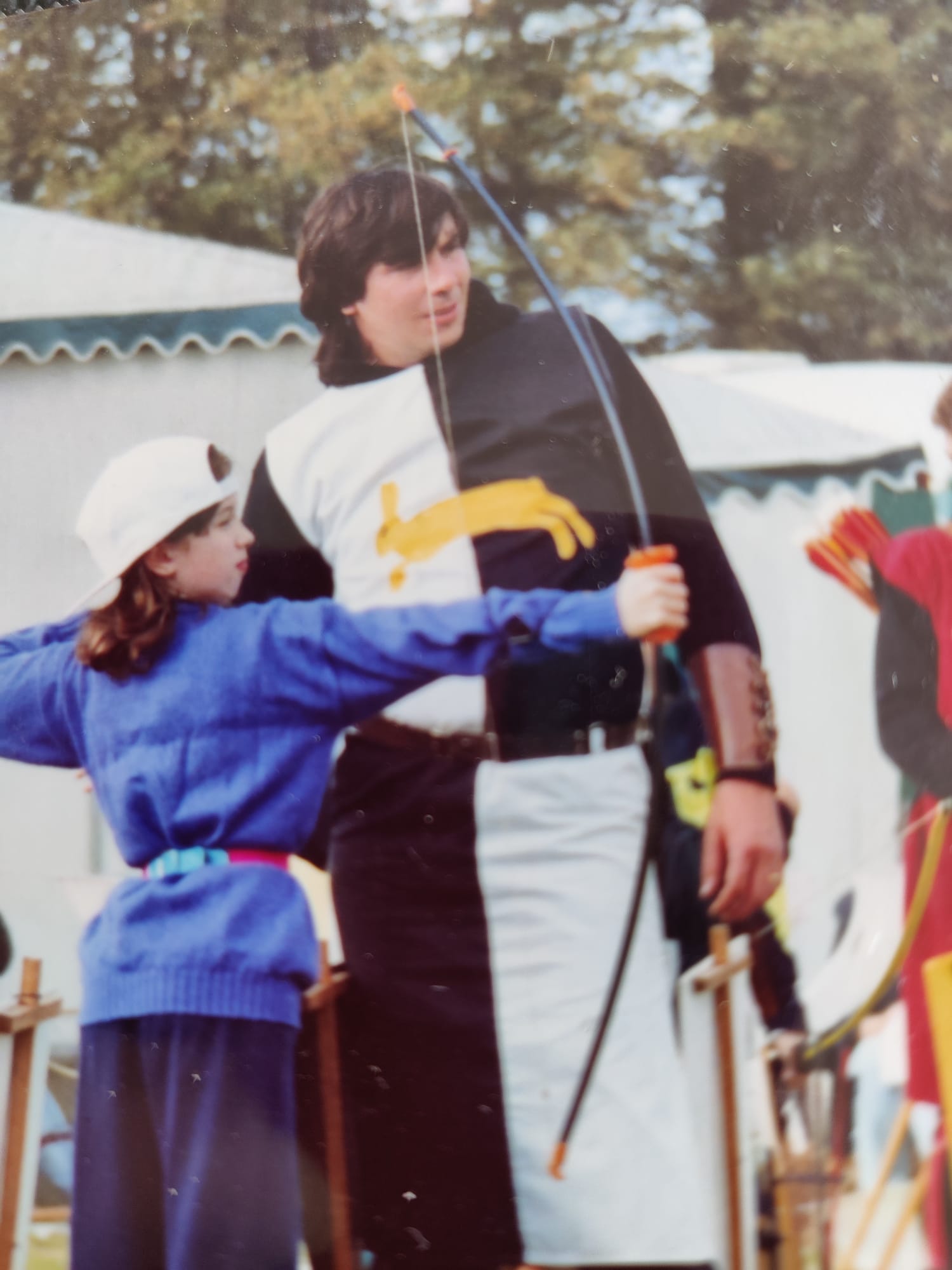
Happy International Women’s Day! This is a slightly longer musing on my story of being neurodiverse AND a gender non-conforming girl.
I’ve spent most of my life looking in on society from the outside, observing changing behavioural norms that I see everyone else emulating without question, especially norms associated with gender.
Judith Butler, a feminist writer, talks about the ‘doing’ of gender, as supposed to the ‘being’ of gender. That is, as well as having boy or girl body parts, we’re also supposed to dress, think and behave in a certain way that reaffirms our gender’s role in our culture.
As an autistic child I created and tried on gender norms to see how they fit. Unlike my peers, I never unconsciously picked up on the social expectations to start looking and acting like how a girl was supposed to look and act in the 1980s and 1990s. Instead, I tried on different gender ‘outfits’ that would today be seen as gender non-conforming.
A critical influence in my childhood was Georgina Kirrin, a character from the wartime book series, The Famous Five. She presented as (and was pleased to be regularly mistaken for) male, and her masculine appearance enabled her to go on adventures with the boys. Sharing George’s desire for adventure, I sought to be like her, from having my hair cut short when I was nine years’ old, to refusing to wear dresses until I was NEARLY THIRTY. I even enjoyed also having a name that wasn’t always clocked as a girl’s name (unless you’re Welsh). The picture at the top of this article tells you a lot about who I was a little girl. I lived in trousers and a backwards baseball cap, engaging in ‘masculine’ activities like archery at a joust.
Child me was, without realising it, trying to subvert patriarchal limitations placed upon women and girls – but it came at a cost. As an undiagnosed autistic girl, I faced criticism and bullying from other girls for being non-conforming and awkward – behaviours that were deemed perfectly acceptable in my male peers. Boys could look, act and do what they wanted, but girls could not and would be punished by their own for such transgressions. It didn’t endear me to pursuing femininity, so I doubled down on my masculine ‘outfit’ as a rejection of the female social identity, as well as to mark my preference for that of the male.
Adult me still consciously puts on gender ‘outfits’, but now with more self-awareness. However I decide to present myself is no longer about embracing masculinity in the pursuit of freedom, nor is it about rejecting femininity because of its associations with bullying. I just wear what will make me feel comfortable in myself for what I’m doing that day, be it wearing a pleasing colourful dress to feel pretty or donning a huge coat so I don’t get cold (or both at the same time).
In fact, today we live in an age where people are more accepting of different gender social constructs, from non-conforming hair styles to alternate gender identities. One of the reasons for the current trans moral panic appears to be the threat felt by those attached to outdated gender norms, by the rise and normalisation of non-dominant gender narratives. It is, I hope, a sign of progress and that if we keep challenging traditional gender expression and identities, we can continue to create a more diverse and accepting world.
 University of Brighton fine Art (Painting) submission
Leave a comment