A long and patchy experience
[This is a bit of a longer one as it requires a bit more explanation, but hopefully it’ll be worth it.]
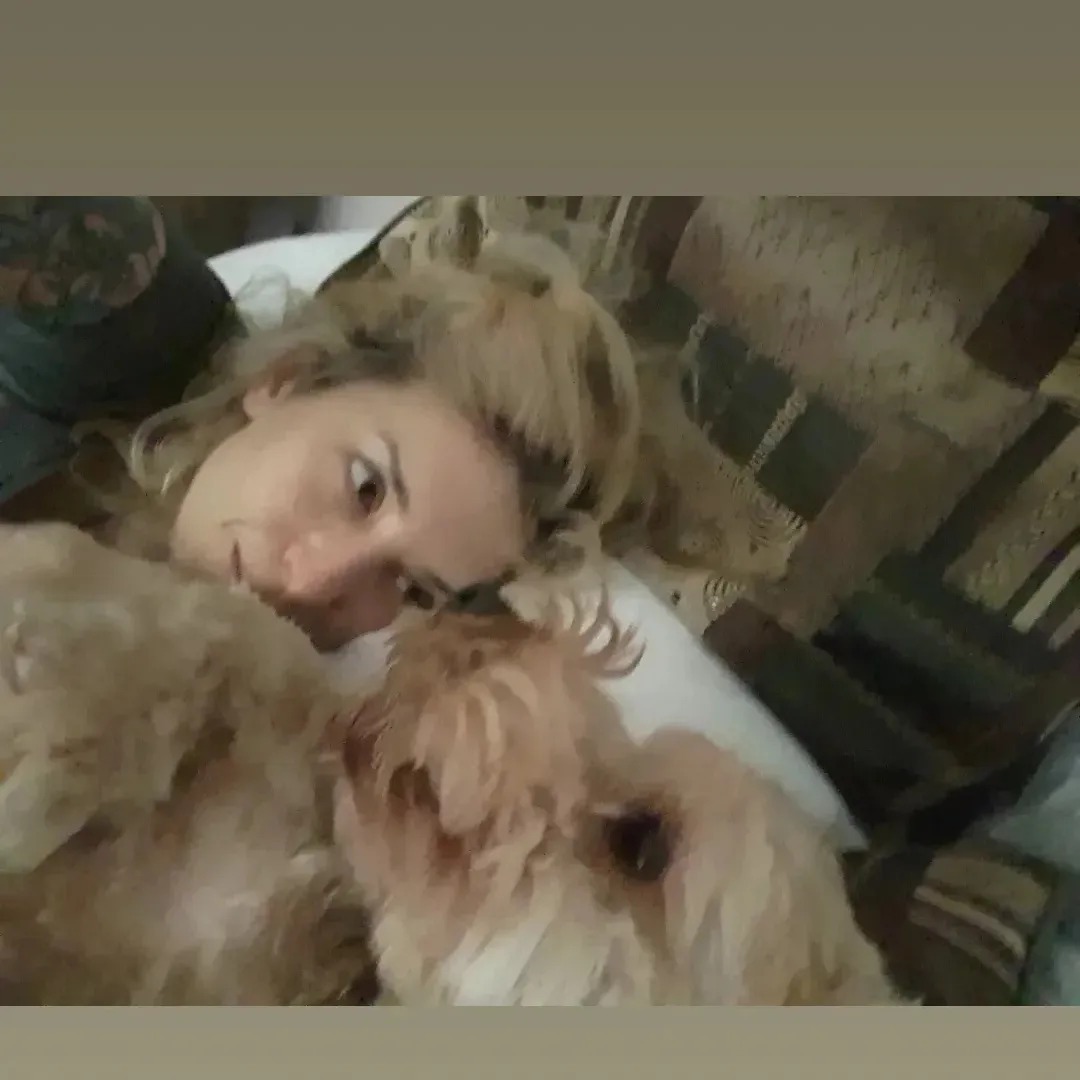
In August, I lost my beloved cockapoo, Clarence. He was my unofficial emotional support dog. He was a rescue with a lot of problems but, as a fellow high anxiety being, we found such happiness in each other. I loved him more than I have loved anything in my life and I know it’s taking me longer than other people to recover.
The grief process is another way in which autistic people are different. We don’t go through the traditional Kubler Ross cycle of shock/ denial, anger, bargaining, depression, acceptance (strictly speaking no-one does, as grief isn’t straightforward, but that’s another essay). Instead, autistic people experience something much more patchy and long-lasting.
Below is a model of my (anecdotal) model of autistic grief, based on my own journey and what I’ve read about others’ experiences.
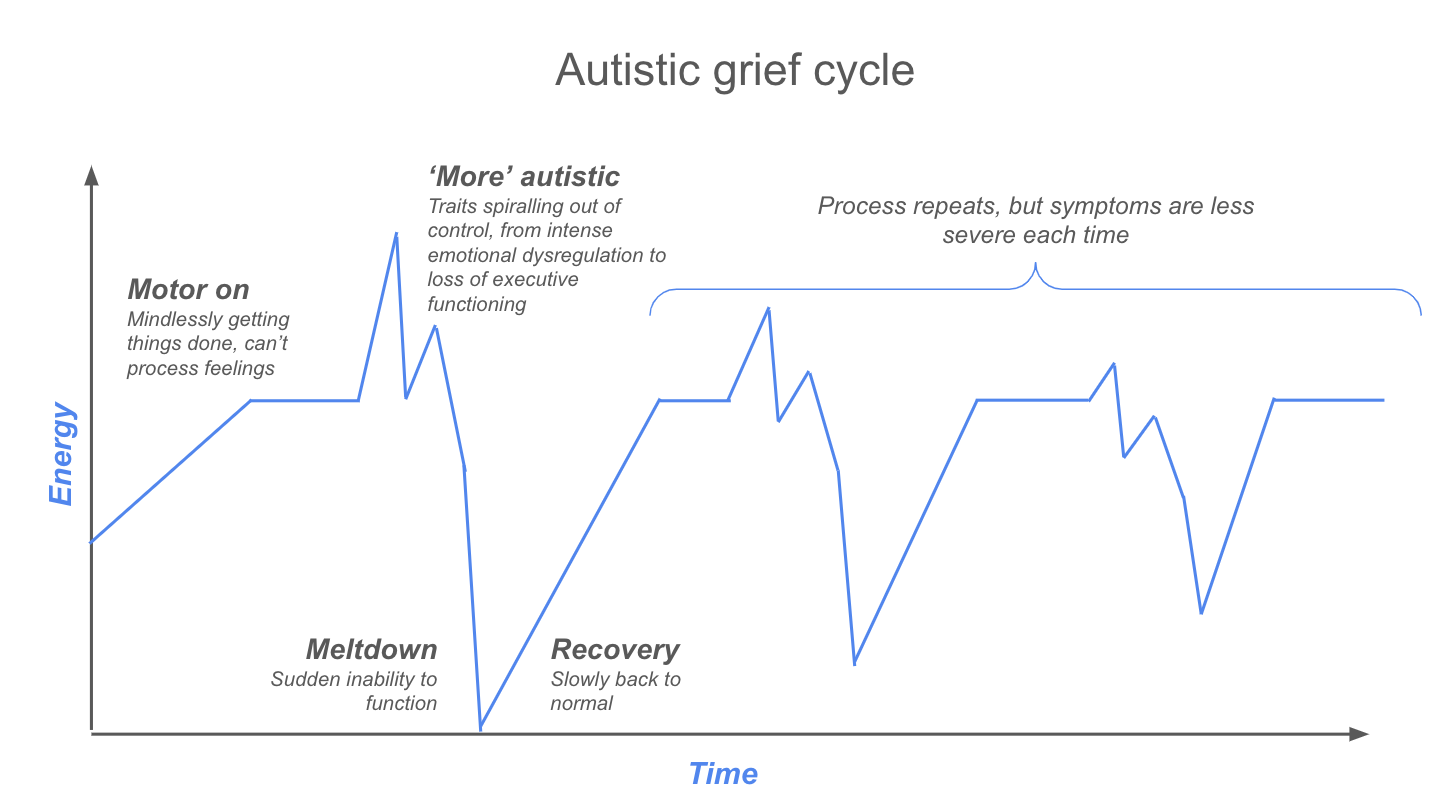
Motor on. When shit hits the fan, autistic people may look like they either don’t care or are coping really well. It’s similar to shock/ denial in that at this time, we can’t process our feelings. When Clarence died, I immediately sorted the admin and took not a single day off work. It wasn’t because I was ok, it was because I couldn’t stop, unable to sit with the immense feelings I knew were coming.
‘More’ autistic. When we experience extreme loss, the world stops making sense and so our ability to cope goes too. We’ll appear more emotional, our executive functioning will be appalling, we’ll keep spilling our tea. Whilst I didn’t stop working, my performance was all over the place. I couldn’t neither focus nor understand basic instructions – it was like my brain had stopped working.
Meltdown. All of a sudden, the malfunctioning autistic breaks down entirely. It’ll look like it’s come out of nowhere, but it’s that the dam has finally burst and now we can’t function at all. For about a month I had to take every Monday off because I would be so burnt out by Friday that I was not recovered enough to function by Monday, having cried for most of the weekend.
Recovery. As with all meltdowns, we eventually recover, slowly putting the broken pieces of our routines back together. We’ll perhaps be quieter and less confident, not only waiting for our brains to come back online, but also dealing with the post-meltdown shame and guilt that goes back decades. I remember loathing being autistic and openly wishing I could ‘just be normal’.
And repeat. The ‘mindless motor’ ramps back up and we start again. Thankfully, with every cycle our experiences become less extreme. Today, I’m still prone to bouts of crying, but they aren’t so intense as to stop me from working. I might need to re-read instructions a few times, but I tend to get them right now. And when I do meltdown, it’s less severe and I recover faster.
Unfortunately, this process can last a great deal of time. Long after many neurotypical people have moved on, autistic people can still feel stuck in their grief cycle, wondering if this is it for them now and if they’ll ever be able to manage again. It’s important to acknowledge and accept what’s happening to our brains, rather than force ourselves to behave as society expects – suppressed feelings do not help with recovery. And it will get better, I promise you this.
P.S. we just this week got a new pup, Ada! I was overwhelmed with grief again when we got her as it reminded me of losing Clarence all over again. But Ada has brought a new kind of joy into our lives and it’s helping me to look forward, rather than only back.

 University of Brighton fine Art (Painting) submission
Leave a comment