Not to be melodramatic, but it’s a red pill/blue pill situation
Thinking of pursuing a diagnosis for your suspected autism/ ADHD? Wondering if it will even change anything? In a word, yes. Not only will it open the door to a range of formal support, such as at work or medical assistance, but the psychological impact it may have on you is nothing short of profound.
You will undergo a kind of change journey, which is akin to Kübler Ross’s 5 stage grief process:
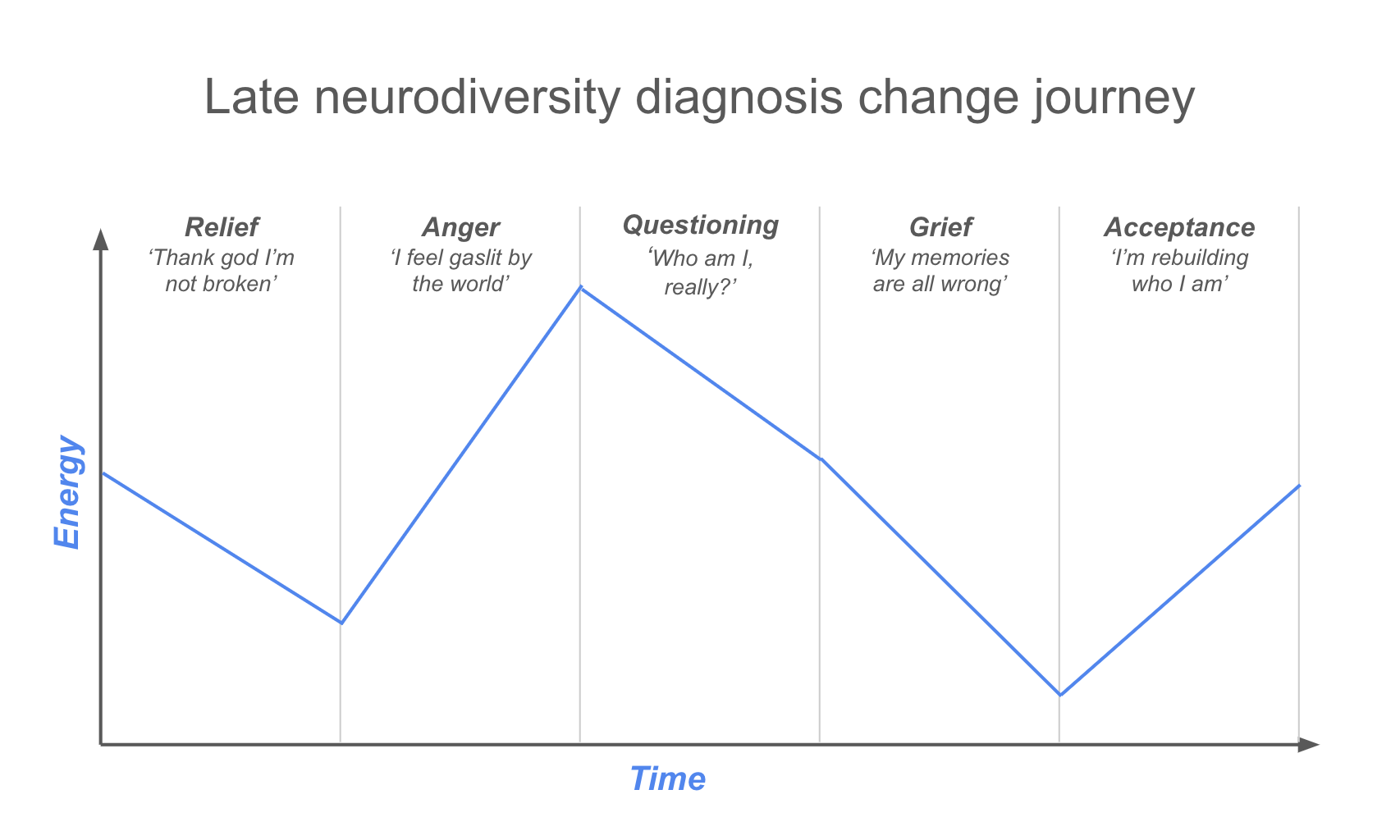
Relief: Big sigh. You were right all this time. You’re not a weirdo, you’re not broken. You’re neurodiverse.
Anger: You’ve spent your whole life being gaslit that your feelings, your thoughts are invalid. And now you can see the neurotypical hypocrisy of you being called unempathetic or too rigid. It’s all a very hard pill to swallow.
Questioning. Who, in fact, are you? Is this thought you’re having part of your neurodiversity, or is it what everyone thinks? Do others really not feel things as intensely as you do? Maybe if you try harder you can stop being so clumsy?
Grief: Everything you thought was real about your life is crumbling. Your memories make up a lot of who you are and now they’re all wrong. You have to let go of a lot of who you thought you were. This feels like a long, long process.
Acceptance: You’re learning about yourself, perhaps periodically recognising that you have more neurodiverse attributes than you thought – but now you know how to acknowledge and manage them. You’re learning boundaries and a new language to describe your experiences to others. Life starts to become easier.
You may experience multiple stages at once at the same time, or revisit stages as realisations about your brain and life develop. It’s not an easy journey, but that’s because getting diagnosed is the first step in transitioning to a whole new reality. But I promise that the happiness you will gain by being able to create a life more in line with your brain makeup, makes it totally worth it.
 University of Brighton fine Art (Painting) submission
Leave a comment